Finding Community at Your Favorite Irish Pub in NYC
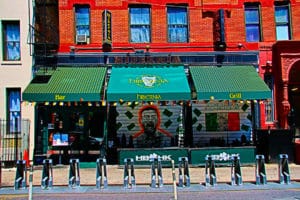
New York can be thrilling, lucrative, inspiring, and brutally anonymous, sometimes all before lunch. People arrive here for work, school, reinvention, heartbreak, momentum, or some mixture of all four. They learn subway maps, apartment compromises, and how to keep moving when whole blocks seem to pulse faster than their own heartbeat. What many of them still need, after the career step and the signed lease, is a room where they are recognized. Not in a transactional way, not as another reservation or another tab, but as a familiar face.
That is where the neighborhood pub still matters, especially the Irish pub. In a city crowded with bars designed for spectacle, the Irish pub NYC regulars return to tends to offer something less flashy and more durable. It is a place built on repetition, warmth, conversation, and a kind of unspoken social contract. Show up enough, treat people well, and over time the room opens to you.
People sometimes reduce Irish pubs to aesthetic shorthand: dark wood, football on television, Guinness on draft, maybe a fiddle tune in the background. Some certainly fit that picture. But the real draw has less to do with décor than with habit and hospitality. A good Irish pub in New York gives people a third place, that old sociological term for a setting that is neither home nor work, where community can form without much ceremony. In a city where many relationships begin as networking and many plans arrive wrapped in calendar invites, there is real value in a place where belonging grows slowly and naturally.
Why Irish pubs have a special place in New York life
New York and Irish pub culture have been intertwined for generations. That history matters, but what matters just as much is how the format continues to function now. Irish pubs tend to be built for lingering. The lighting is usually kind to tired faces. The menu is broad enough to support a casual dinner, a late pint, or a plate of chips shared at the bar. Seating often accommodates different kinds of interaction, couples in a snug booth, co-workers at a table, solo regulars along the rail, families stopping in early on a weekend afternoon.
That flexibility creates unusual social range. On any given night, the room may hold teachers, hospital staff, union electricians, recent graduates, finance professionals, visiting cousins, off-duty musicians, and people who have lived on the same block for thirty years. New York rarely mixes its tribes by accident anymore. Many venues narrow themselves to a scene, an income bracket, an age range, or a carefully branded identity. The Irish pub often resists that narrowing.
There is also a practical side to the appeal. Compared with bars centered on bottle service, elaborate cocktail programs, or exclusivity, many Irish pubs offer a more accessible night out. Prices still vary widely across Manhattan, Brooklyn, Queens, and the Bronx, but the value proposition is usually clear. You can often get a well-poured pint, a solid meal, and enough ambient energy to feel part of city life without committing to a three-figure evening. That matters for regulars, because community is hard to build in places you can only afford once a month.
The difference between a bar you visit and a pub you join
Not every Irish pub becomes a community hub. Some are mainly tourist stops. Some are sports bars with Irish signage. Some are perfectly pleasant but don’t quite develop the chemistry that turns customers into regulars. The difference usually comes down to a few human details.
The first is memory. In a true local, staff remember how people take their pint, where they like to sit, whether they prefer conversation or quiet, and when to leave them alone. That memory does not need to be theatrical. In fact, the best version is often subtle. A bartender slides over the usual without fanfare. A server asks how your sister’s visit went because you mentioned it last Friday. A doorman nods before you even reach the threshold. These are small acts, but in a city defined by constant turnover, they land with surprising force.
The second is pace. Community rarely forms in places optimized for rapid churn. A pub that welcomes regulars usually allows the room to breathe. The music sits at a level where people can still speak without leaning across the table all night. Nobody rushes you through the second round if the place is not slammed. Even on busy evenings, there is often an understanding that conversation is part of the product.
The third is continuity. In New York, restaurants and bars open and close at dizzying speed. A pub that survives long enough becomes more than a business. It becomes part of people’s personal maps. First dates happened there. Jobs were celebrated there. Wakes were held nearby, then stories continued at the bar after. Neighbors watched World Cup matches there at 8 in the morning, then returned months later on an ordinary Tuesday because the place already carried shared history.
How regulars are made
There is no dramatic initiation. Most pub communities are built from recurring, unspectacular visits. A person stops in after work because the place is two blocks from the train. They return the next week because the shepherd’s pie was better than expected and the bartender handled the Friday rush without making anyone feel invisible. Then one evening they recognize another face from before. A casual comment about the Rangers or the weather becomes a ten-minute conversation. A month later, they are waving hello across the room.
This process feels almost old-fashioned now, precisely because it is not accelerated. You cannot download belonging. You cannot hack your way into neighborhood trust by performing familiarity. People notice who only comes when it is convenient and who shows up consistently, tips fairly, respects staff, and understands the room. Over time, people also notice who can hold a conversation without dominating one, who can sit alone without broadcasting loneliness, and who understands that community depends on attention more than self-display.
If you are new to the city, this can be comforting. You do not have to be loud or charming on command. You do not need a preexisting group. Many strong pub regulars began as solitary patrons with a newspaper, a novel, a score to check, or fifteen quiet minutes between meetings. Good pubs know how to make room for solitary people without making them feel isolated.
What staff contribute to the culture
Anyone who has spent time in a well-run pub knows that management and staff shape the room more than any design budget ever could. Hospitality here is less about polished scripts and more about judgment. The best bartenders read a room almost like conductors. They know when to keep banter light, when to let a couple have privacy, when a regular needs checking in on, and when a table’s rising volume is about to tip from convivial to annoying.
That kind of judgment is learned. In New York, pub staff often deal with tourists, office crowds, sports nights, private events, and neighborhood regulars in the span of a single shift. Balancing those groups is not easy. If management chases only the highest immediate spend, local trust erodes quickly. Regulars can forgive a crowded night. They are less forgiving when a pub begins treating its base as background scenery for more profitable traffic.
Good pub culture also depends on consistency behind the bar. People form attachments to places, but often what they are really attached to is a staff ecosystem. One bartender keeps the Guinness line right. Another remembers that a patron’s father is in town. Another breaks tension during a packed match day with one dry joke. These people become unofficial civic figures in their micro-neighborhoods. They hear job news, family news, apartment gripes, and dating postmortems. They witness lives unfolding in installments.
The rituals that turn strangers into neighbors
Community often grows around ritual. In Irish pubs, that might mean trivia on Tuesday, trad music on Thursday, the early Premier League crowd on Saturday, or the Sunday afternoon lull when families and older regulars reclaim the room. The event itself matters less than the predictability. Predictability gives people permission to return before they know anyone well.
Sports are a particularly strong example. You do not need to arrive with a ready-made friend group if the room already shares an object of attention. Watching a match in a pub compresses social distance. A disputed referee call, a late equalizer, a ridiculous missed chance, these create instant conversational openings. Even people who barely spoke before kickoff may be debating lineups by the second half.
Music can do the same, though in a different register. A session with traditional tunes, if handled properly, creates texture without pushing the room into performance-only mode. The best pub music nights enhance conversation rather than replacing it. Too often, venues make the mistake of treating live music as a volume competition. Experienced publicans know that if people cannot talk, they will not become regulars.
There are quieter rituals too. The weekday lunch crowd that rotates through the same stools. The after-funeral gathering where someone tells the same story three times and nobody minds. The bartender’s bell at last call. The annual charity night that raises money for a local school, a family in need, or a community cause. None of this is glamorous. That is partly why it works.
How to find the right Irish pub NYC residents actually keep returning to
If you are trying to find a pub that can become your place, it helps to look past first impressions. A lively room on a Saturday night tells you almost nothing by itself. Plenty of bars can create temporary energy. What you want to know is whether the place has durable character at ordinary hours.
Here are a few signs worth noticing:
- Staff acknowledge solo patrons without hovering.
- The crowd includes people of different ages and professions.
- Conversation is possible without strain during most non-event hours.
- Regulars seem relaxed rather than possessive.
- The place feels equally comfortable for one pint or a full evening.
That last point matters. Some venues excel as destinations but fail as local haunts. They require too much logistical effort, too much noise tolerance, or too much spending to become part of weekly life. Your ideal pub may not be the most famous one. It may simply be the one where your shoulders drop when you walk in.
Neighborhood context matters too. An Irish pub near office towers may hum from 5 to 8 p.m. And empty afterward. One in a residential part of Queens or Brooklyn may have deeper weekday roots but a softer late-night edge. Pubs near major transit hubs attract passing crowds and can be useful meeting points, though they sometimes struggle to build the same intimacy as a place tucked into a true neighborhood strip. None of these patterns are rules, but they shape the kind of community available.
Becoming a regular without forcing it
People often worry about this more than they admit. They want the ease of being known somewhere, but they fear looking overeager or intrusive. The good news is that pub culture generally rewards patience over performance.
A few habits help:
- Go at similar times so faces become familiar.
- Learn staff names, and use them naturally.
- Tip consistently and fairly.
- Read the room before starting conversations.
- Respect the place when it is busy, stressed, or short-staffed.
There is an art to being present without trying to own the room. Some newcomers make the mistake of treating a pub like instant theater, arriving determined to become everybody’s friend by midnight. That usually backfires. The regulars who settle in best tend to be observant. They notice who wants to chat, who is there for the match, who is decompressing after work, and who has known each other for years.
It is also worth understanding that every pub has edge cases. A place can be wonderfully warm at the bar and less welcoming at large tables. Another may be ideal on weeknights but chaotic during major sporting events. Some pubs are terrific for multigenerational gatherings, while others skew so heavily toward late-night drinking that they are less suited to building broad neighborhood ties. Community is not a generic feature. It has a shape.
Why this matters more in a city like New York
Big cities offer abundant connection and abundant isolation at the same time. You can spend all day among millions and still feel unmoored. Many adults, especially after college or after a move, discover that friendship now requires architecture. It needs repeated contact, low-stakes interaction, and room for spontaneity. Work no longer guarantees lasting bonds. Social media creates awareness without intimacy. Group chats keep plans alive but not necessarily relationships.
The neighborhood pub still provides one of the simplest social architectures available. It asks relatively little. Show up. Sit down. Stay awhile. That simplicity is part of its strength. You are not auditioning for a club or trying to optimize every minute. You are entering a space where overlap can happen.
For immigrants, transplants, and people rebuilding after divorce, grief, or career upheaval, this can be especially important. A familiar pub offers continuity when other parts of life feel provisional. During hard https://chancezyei366.image-perth.org/what-to-expect-from-a-classic-irish-pub-nyc-experience stretches, even being greeted by name can steady a person more than they expected. That may sound sentimental, but anyone who has watched a room close ranks around a regular after bad news knows it is true.
There is also civic value here. Cities need informal institutions, places where people who would not otherwise meet learn to recognize one another as neighbors. Not best friends, not ideological allies, simply neighbors. A pub cannot solve polarization, loneliness, or urban inequality. But it can create one of the few remaining environments where social contact is not fully sorted by algorithm, income, or status.
The trade-offs and realities
No romantic picture is complete without acknowledging the limits. Pubs are businesses, and community can be fragile. Rising rents push long-running places out. Ownership changes can alter a room within months. A staff turnover wave can break the continuity that made a pub feel like home. Success can also create its own problem. Once a local gains wider fame, weekend crowds may overwhelm the very atmosphere regulars loved.
There is also the obvious fact that pub life centers on alcohol, which does not suit everyone and should not be idealized. Many of the best Irish pubs do a better job now than they did years ago with nonalcoholic beer, coffee, tea, and food-forward visits, but the setting still revolves around drinking culture. For some people, that is a reason to engage carefully or not at all. A thoughtful article on community should say that plainly.
Even among drinkers, moderation and fit matter. The pub that helps one person build healthy local ties might encourage another person’s worst habits. The line is individual. The strongest pub communities often understand this and make space for people who come for the company as much as the pints.
What people are really looking for when they choose a favorite pub
Ask ten regulars why they return to their favorite place and you will get ten different answers. One loves the chowder. Another swears the Guinness is consistently better than anywhere within ten blocks. Another met their spouse there. Another started going after a parent died because it was the only room where they did not feel obliged to explain themselves. Surface reasons vary. The deeper reason is usually simpler. The place lets them be a version of themselves that feels grounded.
That quality is easy to underestimate. New York can encourage constant self-editing. At work, you perform competence. On dates, attractiveness. Online, relevance. In a good pub, those performances ease off. You can be witty one night, silent the next, celebratory after a promotion, distracted after a rough week. The room absorbs ordinary human fluctuation. That is a rare kind of social mercy.
An Irish pub NYC locals truly love is rarely perfect. The fries may be inconsistent. The restroom may be too narrow. The television setup for major matches may inspire annual arguments. Yet people forgive these flaws because the place offers something that cannot be designed by committee. It offers continuity, recognition, and enough warmth to make one crowded city feel briefly manageable.
And that, more than the menu or the branding or even the music, is why people keep coming back. They are not just looking for a pint. They are looking for a room that remembers them, and for the chance, over time, to remember other people right back.
Hibernia Bar
401 W 50th St
New York, NY 10019, United States
Phone: +1 212-969-9703
FAQ About Irish Pub NYC
What is the best Irish pub in NYC?
The best choice depends on your location and preferred atmosphere. Hibernia Bar is a neighborhood Irish pub in Hell's Kitchen offering Guinness, Irish whiskey, pub food, and sports viewing.
Where do Irish people go in NYC?
New York's Irish community gathers in many neighborhoods and venues. Hibernia Bar welcomes Irish expats, local residents, and visitors at 401 W 50th St, just off Ninth Avenue.
Where can I watch GAA games in New York?
Hibernia Bar lists GAA among the sports it shows. Call +1 212-969-9703 to confirm coverage and opening times for a particular match before visiting.
What is the difference between a bar and a sports bar?
A sports bar emphasizes televised games and a shared viewing atmosphere. Hibernia combines sports viewing with the food, drinks, and hospitality of a neighborhood Irish pub.